Managing leads effectively in 2025 means guiding every prospect through a consistent, personalized process from first contact to conversion.
Lead lifecycle management connects every step of that process.
In this guide, you’ll learn exactly how to capture, nurture, score, and convert leads efficiently, using modern tools and proven strategies that reduce friction between marketing and sales. From automation to analytics, this guide explains how to build an efficient system that scales with your business.
Let’s start by understanding what lead lifecycle management really means in today’s marketing landscape.
What is lead lifecycle management?
Lead lifecycle management is the process of tracking, nurturing, and optimizing every interaction a lead has with your business: from the moment they show interest until they become a loyal customer.
It combines strategy, automation, and analytics to make sure no lead is lost, every touchpoint adds value, and marketing and sales stay aligned.
Stages of the lead lifecycle
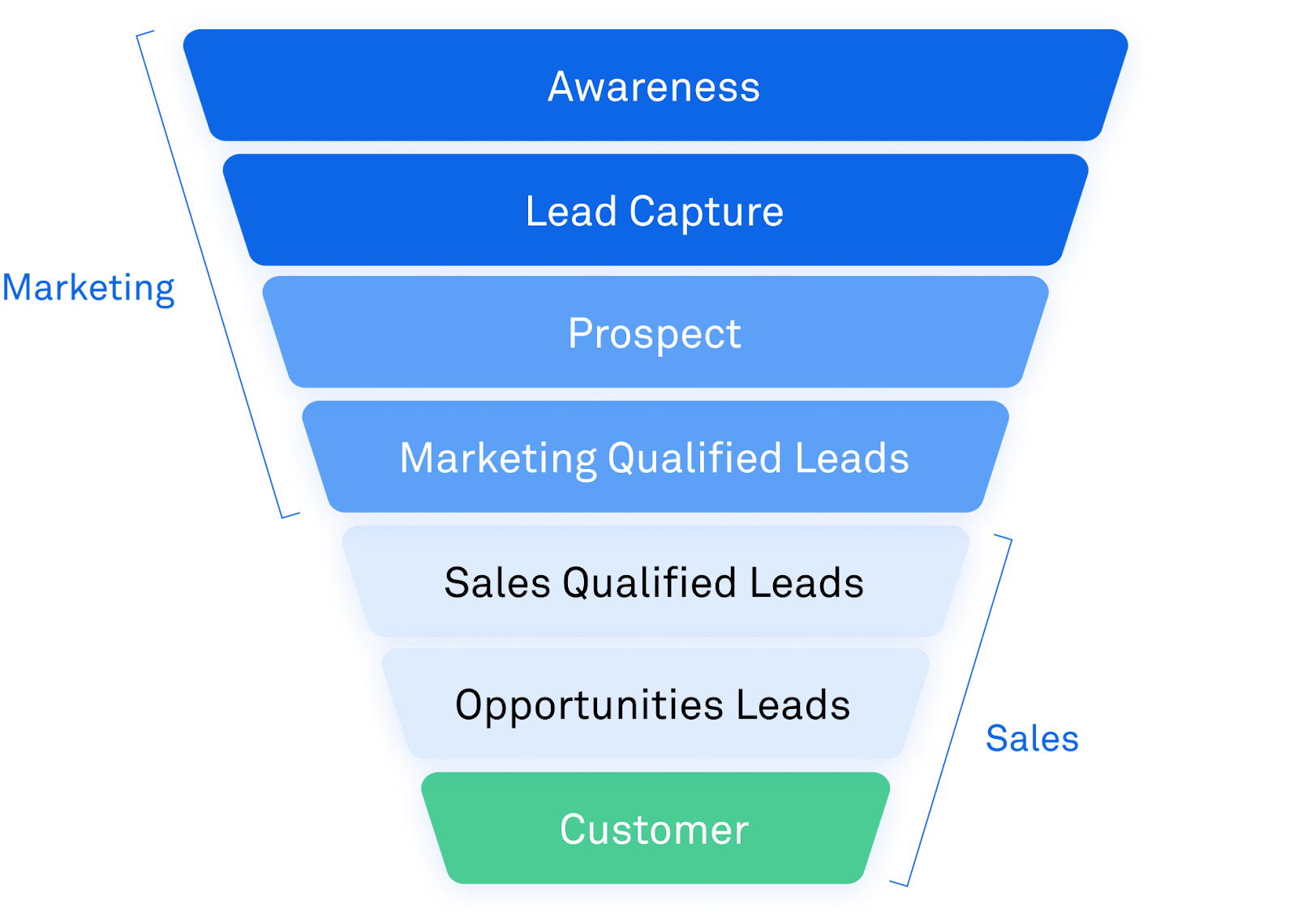
A well-managed lead lifecycle moves prospects smoothly from awareness to purchase, keeping marketing and sales efforts aligned. Here are the main stages every business should track.
1. Lead Capturing
This is where it all begins. Leads are collected through ads, landing pages, forms, or events. Automation sends new leads directly to your CRM, removing manual uploads and helping teams respond faster.
2. Lead Nurturing
Once captured, leads need consistent engagement through email campaigns, social touchpoints, and retargeting - all made easier by automating email marketing workflows. Studies show nurtured leads make 47% larger purchases than non-nurtured ones, proving the value of staying visible and relevant.
3. Lead Scoring
Assign numerical values to leads based on behavior, engagement, or demographic fit. This helps prioritize who’s most likely to convert, enabling sales teams to focus their efforts strategically.
4. Marketing Qualified Lead (MQL)
At this point, leads have shown clear buying intent — like repeated website visits or resource downloads. They’re ready to be passed from marketing to sales for further evaluation.
5. Sales Qualified Lead (SQL)
These leads have been vetted by the sales team and are close to making a purchase decision. Strong collaboration between marketing and sales ensures smooth handoffs and higher close rates.
6. Opportunity / Customer conversion
Once a lead commits to purchase, they become a customer. This stage focuses on onboarding, satisfaction, and setting the foundation for long-term value.
7. Retention and advocacy
Lifecycle management doesn’t end with the sale. Keeping customers engaged through feedback, support, and personalized offers increases loyalty and drives referrals — closing the loop on the lead lifecycle.
Tracking each stage helps teams identify what’s working and where leads drop off, turning your funnel into a measurable, repeatable process.
Business benefits of solid lead lifecycle management
Strong lead lifecycle management improves performance across marketing, sales, and customer success. Here are the key benefits:
- Higher conversion rates: Nurtured and scored leads convert faster and more consistently.
- Improved sales efficiency: Teams spend less time chasing unqualified prospects.
- Better alignment: Marketing and sales share unified data and goals.
- Enhanced customer insights: Tracking engagement across stages reveals what drives conversions.
- Sustainable growth: Automation and analytics create a repeatable system that supports long-term success.
When these benefits come together, they form a self-sustaining system — one that improves every stage of the customer journey over time.

Best practices to manage the lead lifecycle effectively
Effective lead lifecycle management depends on a system that’s both efficient and predictable. Here are five proven strategies to help your teams work smarter and convert faster.
1. Align marketing and sales goals
Consistency between marketing and sales ensures that everyone defines and pursues leads the same way. Set shared KPIs, hold regular syncs, and create a unified lead scoring model to eliminate silos and improve conversion rates.
2. Map and standardize your lead stages
Clearly define each lifecycle stage: from “New Lead” to “Customer.” A standardized framework helps automate triggers and ensures leads never get lost between systems.
3. Automate lead generation and syncing
Manual data transfers slow down response times and cause errors. Automation tools like Ads Workbench sync new leads instantly from ad platforms, including Facebook Lead Ads sync integrations, to CRMs or email systems, so sales teams can follow up in real time. Ads Workbench also updates Facebook and Google audiences automatically, keeping remarketing lists current without extra steps.
4. Use analytics for continuous optimization
Use CRM dashboards, campaign reports, and engagement metrics to track how leads move through the funnel. Identify bottlenecks (like long nurturing cycles or low MQL-to-SQL rates) and make data-backed improvements.
5. Personalize communication across channels
Generic outreach rarely converts. Segment your audience and tailor messages using behavioral data, engagement history, and lead stage. Personalized follow-ups consistently outperform generic ones — studies show they can increase reply rates by up to 40–50% compared to one-time outreach (GrowthList, 2025).
Applying these best practices gives your teams a shared framework, reduces manual work, and keeps the entire funnel moving forward smoothly.
Tools & software for managing & optimizing lead lifecycle
Modern lead lifecycle management relies on the right mix of tools: from CRM platforms to automation systems. Below are three categories of software that make managing, syncing, and converting leads easier than ever.
#1: Ads Workbench
Category: Lead Automation & Syncing
Overview:
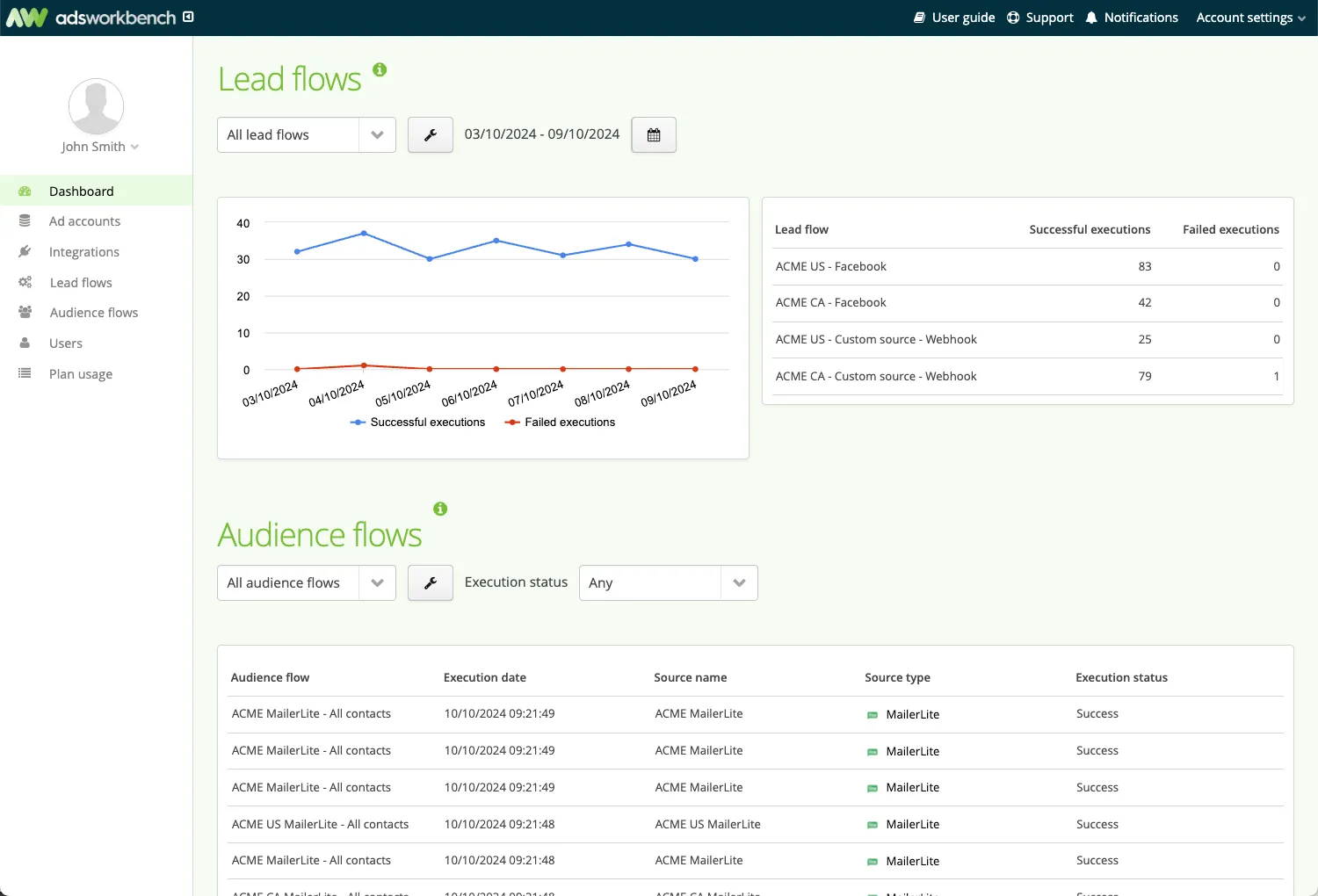
Ads Workbench automates lead delivery between ad platforms like Facebook Lead Ads and CRMs, spreadsheets, or messaging tools, sending new leads in real time with no manual handling or data storage. It’s built for marketers who need dependable automation without the complexity or cost of traditional integration platforms.
Key Features:
- Real-time lead delivery from Facebook, LinkedIn, or Google Ads to CRMs like HubSpot, Salesforce, and Zoho.
- Automatic Custom Audience syncing for remarketing and lookalike campaigns.
- No data storage, ensuring full compliance and privacy.
- Intuitive, no-code setup with flat, transparent pricing.
- Built-in error tracking and sync monitoring for full visibility across integrations.
Best For:
- Agencies, marketers, and growth teams that need fast lead syncing without managing multiple tools.
Start a free 7-day trial and see how fast you can sync new leads to your CRM.
#2: HubSpot CRM
Category: Customer Relationship Management
Overview:
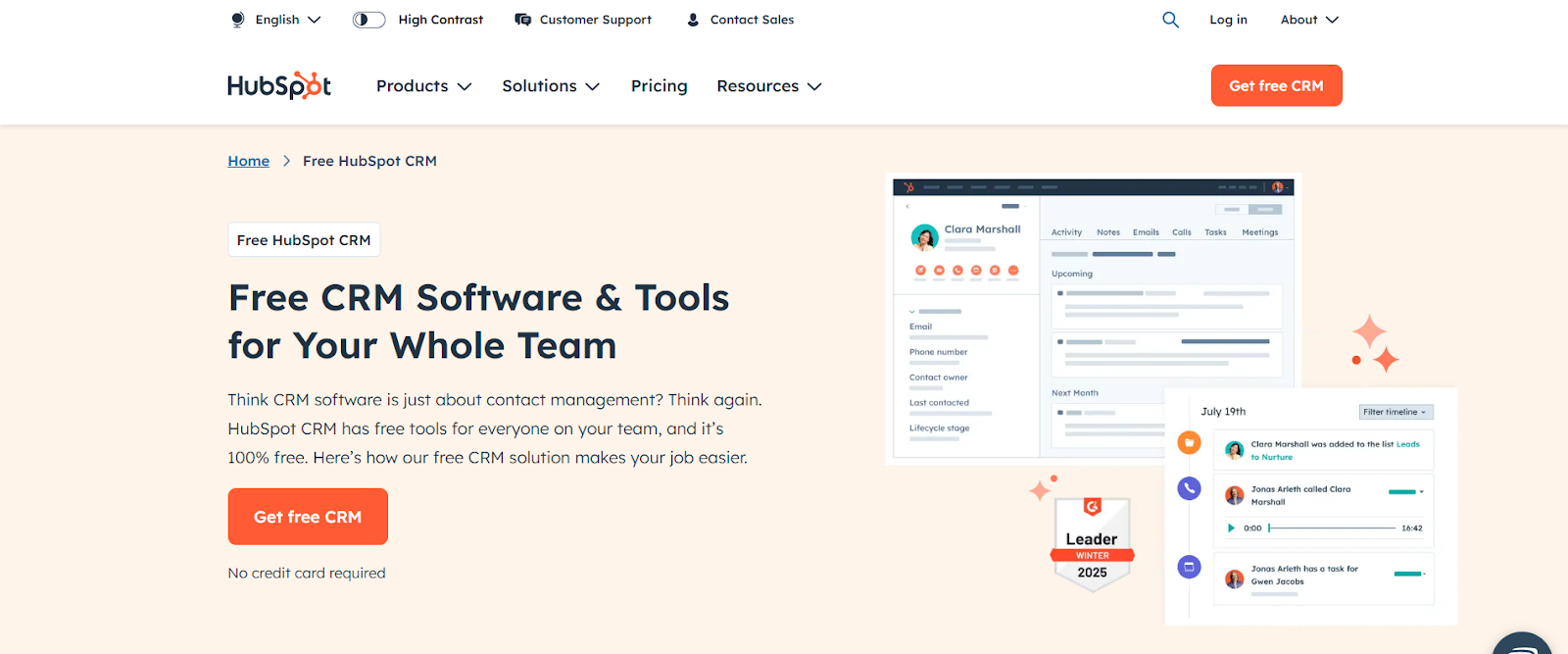
HubSpot CRM centralizes lead data, tracks every interaction, and automates outreach across email, ads, and sales pipelines, also easy to connect using HubSpot integration via Ads Workbench. It gives teams full visibility into the lead lifecycle (from first form fill to closed deal) while helping align marketing and sales efforts through shared reporting and automation workflows.
Best For:
Businesses that need an all-in-one CRM for tracking and automating communication across marketing and sales.
#3: Clearbit
Category: Lead enrichment & scoring
Overview:
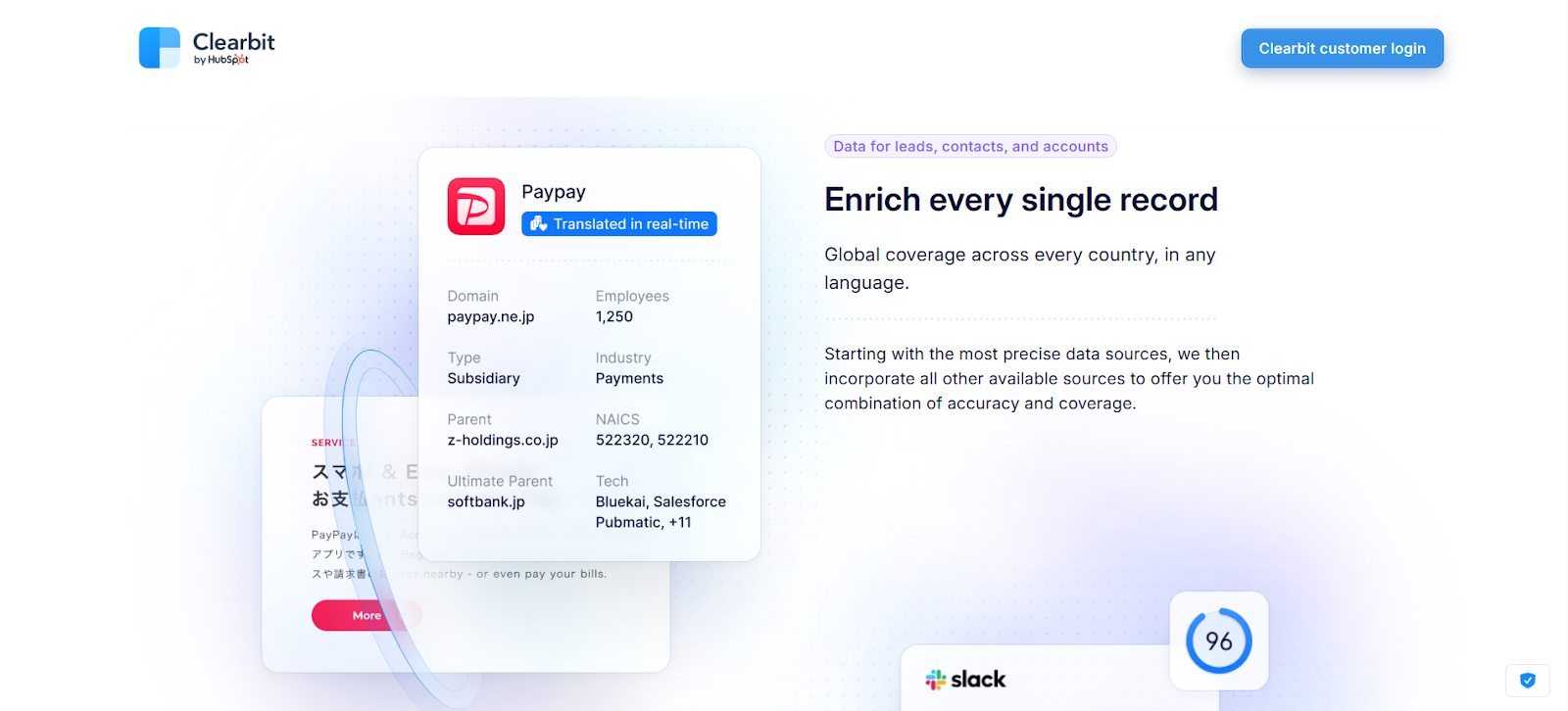
Clearbit enriches incoming leads with verified company and contact data, giving marketers and sales teams deeper insight into who’s engaging with their business. By adding firmographic and behavioral details to each record, Clearbit helps improve scoring accuracy, personalize messaging, and focus outreach on high-value opportunities.
Best For:
Teams looking to improve lead scoring precision and target high-value prospects efficiently.
Combining these tools builds a connected ecosystem — from lead capture to conversion — without unnecessary complexity.
Common challenges of lead lifecycle management
Even with the right strategy, managing leads across multiple systems can be complex. Here are the most common challenges — and how to overcome them.
1. Poor data integration
When CRMs, ad platforms, and email tools operate in silos, teams lose visibility and response times suffer.
2. Inaccurate lead scoring
If your scoring model doesn’t reflect real buying intent, sales teams waste time on cold leads.
3. Misalignment between marketing and sales
Disconnected goals lead to conflicting priorities and missed conversions.
4. Slow follow-ups
Leads go cold quickly — often within hours.
Most challenges stem from gaps in data flow or communication. Addressing them early creates a smoother experience for both teams and leads.
Best use cases of lead lifecycle management
Lead lifecycle management creates value across a range of business scenarios. Here are some of the most effective applications in 2025:
1. Agencies managing multiple ad accounts
Marketing agencies rely on fast lead delivery to maintain performance for multiple clients. With Ads Workbench, agencies can sync leads from Facebook or Google Ads to client CRMs instantly, so teams can respond faster without handling raw data manually.
2. SaaS companies nurturing long sales cycles
Software brands use lifecycle automation to track complex buying journeys. With lead scoring and drip campaigns, they can engage prospects over months while focusing sales efforts on the most qualified opportunities.
3. B2B teams running account-based marketing (ABM)
By mapping lifecycle stages to ABM touchpoints, businesses can deliver personalized content at every stage, boosting engagement and pipeline velocity.
These scenarios show how adaptable lifecycle management can be, whether you’re managing multiple clients or running long B2B sales cycles.
Want to simplify your lead syncing and audience updates?
Start your free trial at Ads Workbench and automate every step of your lead journey today.
Final note on Ads Workbench
A strong lead lifecycle strategy isn’t just about collecting data; it’s about momentum. Ads Workbench turns slow, manual lead handling into real-time automation that connects your ads, CRM, and audiences seamlessly.
Start your free 7-day trial and see how fast leads can move when every system talks to each other.